Insulation contractor in Minnetonka, MN - tighter attics and warmer walkouts
Thermal Burnsville Insulation Company is an insulation contractor that seals and insulates attics, walls, basements and crawl spaces in Minnetonka, MN, finding the air leaks and damp spots first so the new insulation keeps your heat in.
Wooded lots and hillside homes across Minnetonka
Minnetonka isn't laid out on a grid. Streets wind around lakes, ponds and wooded hills, and a lot of the houses sit on big lots under old trees, with ramblers and split-levels on some streets and newer, larger two-stories on others, plus offices and shops along the main roads. It shares that rolling, wooded ground with Eden Prairie just to the south, and the houses in both cities need a lot of the same attic and lower-level work.
You can see what the land does here at Purgatory Community Preserve, with wetland and creek down low and oaks up on the ridge, and plenty of yards have a piece of both. That's why so many homes here have a walkout lower level dug into a slope and a roof that holds snow under the trees, and those two spots are where most of our work in Minnetonka ends up.
What to know about permits and pricing in Minnetonka
In Minnetonka, building permits come from the city's building official in the community development department, so if your job needs one, the work waits until it's issued. We check with the city before anything starts, take care of the permit when the job calls for one, and set up and meet the inspector if there's an inspection. Two things you can check about any contractor here are whether they hold the state license their work calls for, which I explain in the questions below, and, for the kinds of work the city's code lists, whether the city has licensed them, because the city only gives those permits to contractors it has licensed or, in an existing house, to an owner who lives there as their homestead.
What moves the price is how many inches you already have and whether they're dry and clean, how much sealing the gaps need, and whether the job calls for loose fill or foam. The schedule mostly turns on what has to happen first, like a permit, a roof repair or an electrician, and the estimate I leave after seeing your house gives you your own number. As an insulation contractor based in Burnsville, MN, we come up this way regularly, and we do the same work in Edina and the cities around it.
Services in Minnetonka, MN
Attic air sealing
A lot of the ramblers and split-levels here have can lights, bath fans and pipes that punch through the ceiling into a low attic, and every one of those gaps leaks warm air up there all winter. We seal them from above before any insulation goes in, because insulation laid over a leak just hides it.
Blown-in insulation
Many older attics in Minnetonka have only a few thin inches left, often piled deep in the middle and thin at the edges where it matters most. We top them up with blown-in insulation, loose fill blown through a hose, carried all the way out to the eaves while keeping the vents there open.
Insulation removal
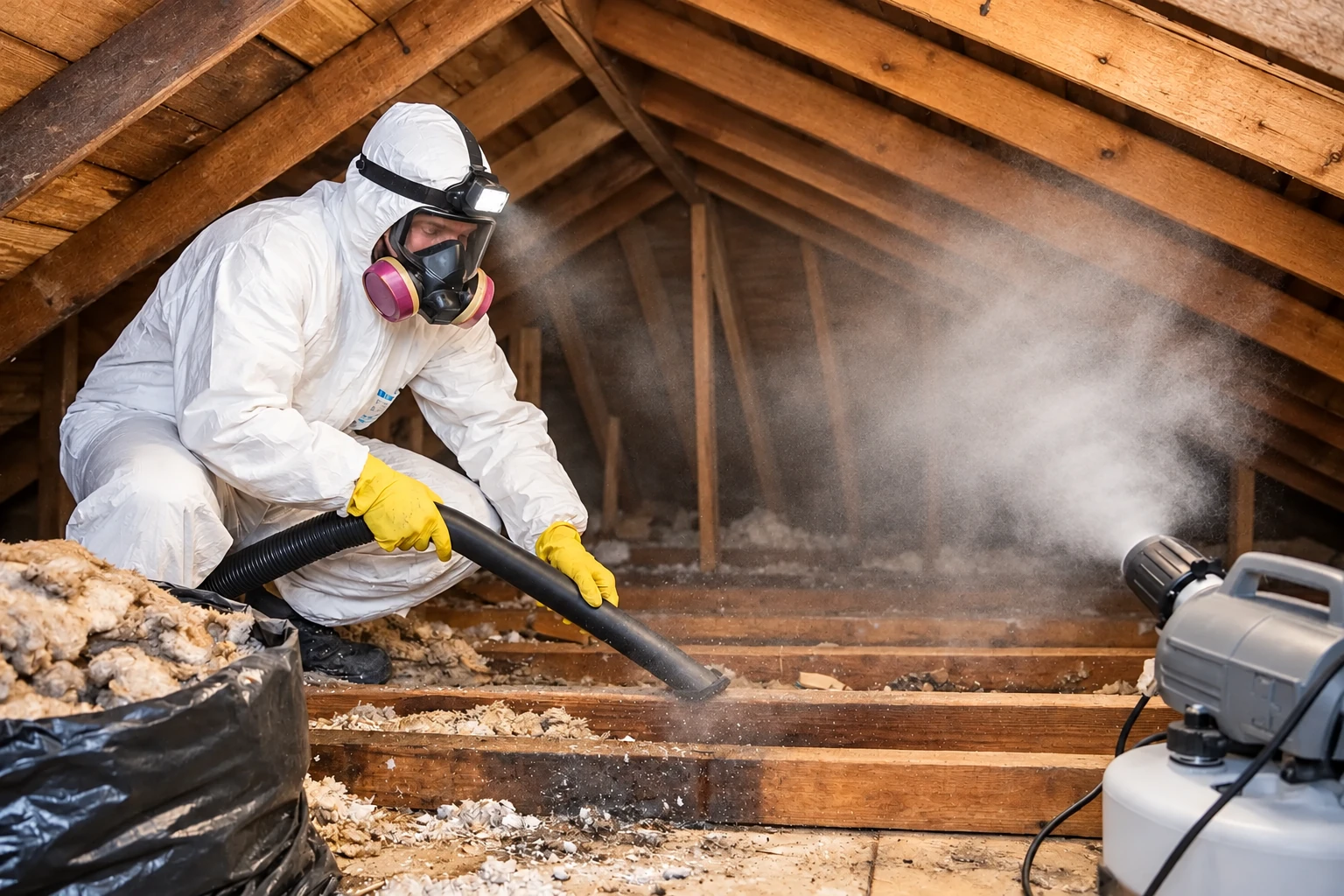
On wooded lots, mice and squirrels find their way into attics, and an old roof leak can leave insulation matted and stained. When that's what we find, we take the old material out first instead of covering it, so the droppings or the damp don't stay under the new layer.
Basement insulation
Hillside lots here mean plenty of walkout lower levels, with one wall buried in the slope and cold floors to match. We insulate those walls and the rim joist, the band of framing where the house sits on the foundation, once we know the wall stays dry.
Spray foam insulation
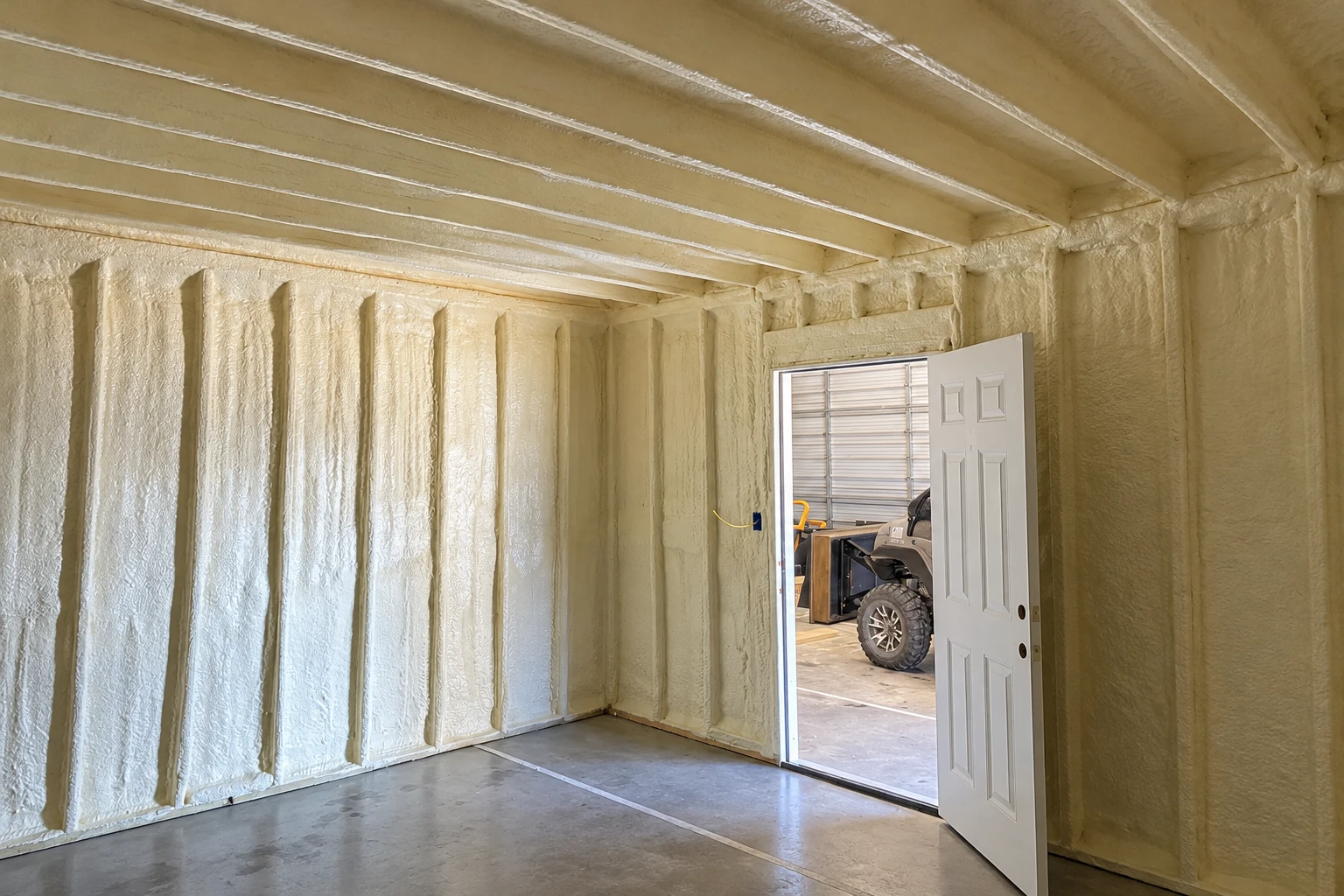
The room over the garage is the usual cold spot in the newer two-stories here, because its floor sits over unheated space and the batts under it often sag away from the subfloor. We usually open that ceiling and spray foam, which seals air while it insulates, so the floor upstairs stops pulling cold.
Commercial insulation
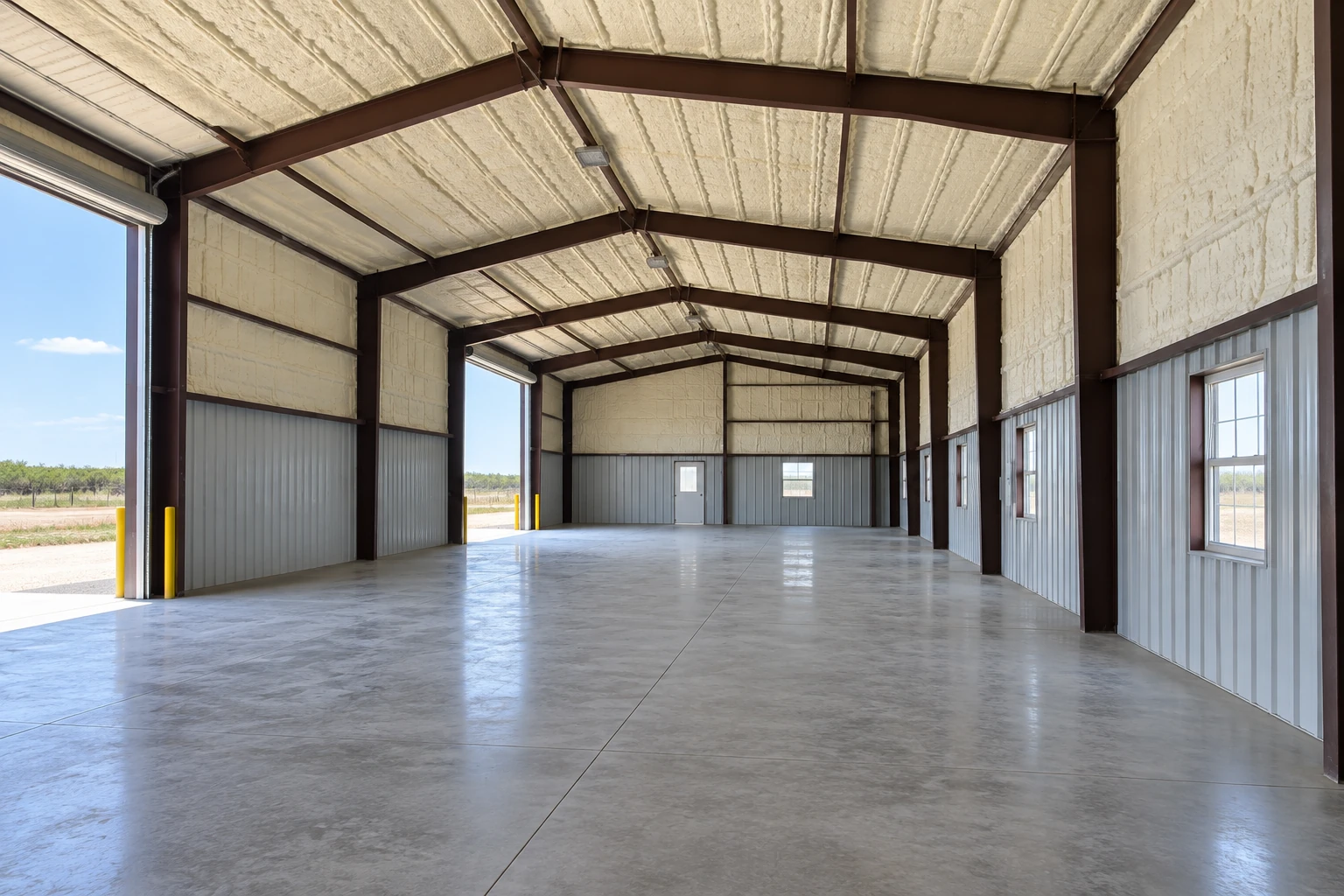
Some of our calls come from people running small offices and shops along Minnetonka's main roads, where a drafty back room or a cold front entry shows up on the heating bill every month. We handle commercial insulation for those buildings the same way we do houses, sealing the leaks first and then insulating.
What Minnetonka houses and hillsides ask for
The age and shape of the house decide most of what we do here. Ramblers and split-levels usually have low, tight attics where the roof comes down close to the ceiling at the edges, so getting insulation out to the eaves without burying the vents takes care, because a blocked vent lets moisture build up in the framing. On the bigger two-stories, the trouble is more often the room over the garage or a knee wall, the short wall behind a finished upstairs room, which is why people tell me it's hot upstairs in July and cold in January.
Water is the other thing the ground here brings. Between the lakes, ponds and wetlands, plenty of lower levels sit in soil that stays damp, so before we insulate a foundation wall I look for staining and soft spots, and if the wall's wet I'll tell you to get the gutters or grading fixed first.
Get a free on-site estimate for your Minnetonka home
Tell us a little about your Minnetonka house and what's bothering you, and we'll get back to you within one business day. I'll come out, look at the space myself and leave you a free estimate, and there's no pressure to book.
How a Minnetonka job goes
Call or send a message
Call (952) 234-9016 or use the form and tell us what you're noticing, like a drafty bedroom, ice on the eaves or a high power bill. We'll set a time for me to come out to your house.
I look at the space first
I go up into the attic or down to the lower level with a flashlight and check for leaks, wet or dirty insulation, old wiring and anything else that has to be handled first. You get an estimate based on what I actually saw, with what moves the price laid out, and if the job needs a permit, we apply for it and the work waits until the city issues it.
Our crew does the work
Our install crew seals the gaps first and then insulates, in the order we planned, and covers the path through your house on the way in. If foam is part of the job, I'll tell you ahead of time how long the foam maker says to stay out before you, the kids and the pets come back in.
We walk the finished job
Before we leave, I walk the job with you so you can see the depth, the sealed spots and the open vents for yourself. If there's an inspection, we set it up and meet the inspector.
Minnetonka insulation questions answered
Does my insulation contractor need a state license to work in Minnetonka?
Only if they're contracting with you for more than one kind of work on a home with one to four units, in which case the Minnesota Department of Labor and Industry requires a residential building contractor or remodeler license. A contractor offering just one special skill doesn't need a state license unless it's roofing, and neither does a builder with less than $15,000 a year in residential receipts who holds a certificate of exemption. When a licensed contractor applies for a building permit, the license number goes on the application, and the city can't issue a permit to a contractor who's required to be licensed and isn't.
Can the city of Minnetonka refuse a building permit for my project?
Yes, the building official can refuse a permit, or stop work already under one, when other work on the property doesn't meet city ordinances. The official can also refuse a permit for work that looks like it sits in an easement, unless the easement holder has given written permission. That rarely touches an attic or a basement, but an open project elsewhere on the lot can hold things up, so mention it when I come out.
How do I know if I need an electrician before insulating my attic in Minnetonka?
You'll know after I look, because if I find old wiring, an open junction or light fixtures that can't be covered, that gets fixed before any insulation goes over it. In Minnetonka the city issues electrical permits only to state-licensed electrical contractors or, in an existing house, to an owner who lives there as their homestead, so that's a separate job from ours. I'd rather wait for the electrician than bury a wiring problem under new insulation.
How much does it cost to insulate an attic in Minnetonka?
It's a number I give you after I've been up in your attic, because what's already there decides most of it. Topping up several inches of dry material costs less than pulling out old insulation that's soaked or full of droppings, and a tight attic with a small closet hatch takes longer to work in than a roomy one. Foam costs more than sealing the gaps and blowing in loose fill, and I only steer people toward it when the ductwork runs through the attic, since that's where foam earns its price.
What causes ice dams on houses in Minnetonka?
Ice dams start when warm air from the house leaks into the attic, melts the snow on the upper roof and the water refreezes at the colder eaves. Under the big trees here, snow stays on a shaded roof longer, so even a small leak around a light or the attic hatch keeps feeding the ice. We fix it by sealing those gaps first and then carrying the insulation all the way out to the edges, and if the roof itself is leaking, I'll tell you to get that repaired before we start.
Should I insulate my basement if my Minnetonka home is near a floodplain?
Yes, once you know how water gets in, because insulation makes a lower level warmer but does nothing to keep a flood out. The city's flood risk page says a typical 100-year event in Minnetonka is 7.4 inches of rain in 24 hours, about a 1% chance in any given year, and that its floodplain maps were last updated in 1999, so treat a map line near your lot as a rough guide. On walls that stay dry we usually use closed-cell foam, dense foam that doesn't soak up water, rather than fiberglass that would hold it.
Get your Minnetonka attic looked at
If you can see your attic joists or icicles hang off your eaves every winter, that's heat you're paying for going out the roof, so call (952) 234-9016 or send us a message and I'll come take a look.